
By: Frog Girl.
Sensory processing can be difficult to regulate as an autistic person. What may feel normal to others feels overwhelming for us. For example, noise from traffic passing by, lights that brighten our room, or textures from clothing are all sensory inputs that the average person can handle. But for many people with autism, these sensory inputs can overload our system and make it difficult to process what we are feeling.
For many of us, overstimulation manifests itself as irritability, fatigue, increased stimming behaviors, or unexpected emotional responses (for example, crying without an obvious cause, or laughing in an inappropriate situation).
Personally, when I start to become overstimulated, it can be hard to think of what would be helpful for me in the moment. This is why, with the help of past therapists, I have created my own “toolkit” for dealing with overstimulation. Not every item will help for all situations, but it is useful to have multiple options in one spot to test out for what will work in that particular moment. Some of these options are good for sensory relief, and some of them are good for hands-on mental distractions. I will detail the items of my toolkit below.
The first item I often grab in my toolkit are noise-canceling headphones. I keep these Loop earplugs in my kit as they don’t take up much space. They are the Loop earplugs that block out the most noise (relative to the others that the company offers), and they don’t irritate my ears as much as the over-the-head options since I wear glasses that can make headphones uncomfortable to wear after 20 minutes. The Loop earplugs come with various sized ear pieces to ensure a comfortable fit, and they are not noticeable that I’m wearing them from a distance. They help to block out additional sounds around me, and make it easier to regulate the rest of my senses while utilizing other tools in my kit.

The biggest item in my toolkit is a small stuffed animal. I chose a stuffed beanie baby frog partially because of the soft texture, but also because I like frogs (cute things are a good mental distraction for myself). This stuffed animal is small enough that it can fit it in my toolkit, but it’s large enough that I can hold it in my arms comfortably. Rubbing the soft texture along my arms and hands can help to relieve some feelings of overstimulation, especially as I am particularly sensitive to tactile stimuli. The soft texture is soothing, and repetitive motions of rubbing it up and down my arms helps to keep me calm. I find it best to use the stuffed animal when I am feeling anxious, or particularly sensitive to tactile sensory input.

A stress ball is a common method for autistic and non-autistic people alike to relieve some stress by channeling physical tension into the stress ball. I don’t know where mine is from, as I think my mom brought it home for me years ago, but here is a link for a set of stress balls with various levels of firmness that I have heard good recommendations for. You can channel your physical tension into the stress ball by squeezing it as hard as you can, or you can roll it between your hands for a soothing motion, or even throw it up in the air if you wish for a more energetic channeling of your feelings. I find it best to use the stress ball when I am feeling irritated or tense.

An alternative to the stress ball is my silicone leaf which can be used to bite on. I have a habit of grinding my teeth when I am overstimulated, or even biting my hands/arms when I’m really not doing well. Sometimes it can be helpful to bite down hard on something that isn’t myself, and that’s where the silicone leaf comes in handy. I keep it on a lanyard, and sometimes end up flinging it around, or wrapping the lanyard around my hand while I bite the leaf. I find it best to utilize the silicone leaf when I am feeling tense, angry, or generally emotional.

Speaking of lanyards, I keep multiple lanyards in my toolkit. Maybe it’s just me, but I find something soothing about the soft texture and cool prints of my lanyards. I like to wrap them around my hands or rub them along the insides of my hands to decrease my overstimulation. Sometimes I like to simply spend time folding them, wrapping them into a ball, or lining them next to each other. I find it best to utilize the lanyards when I am feeling scatter-brained, upset, or physically tense.
I like to keep a kaleidoscope in my toolkit as they can be visually calming. I bought mine years ago from the dollar store, but this is a similar kaleidoscope to the one I have. It is small, simple, and does not have any additional patterns/prints. When I look through the kaleidoscope, it takes a small portion of what I’m looking at and multiplies it throughout the lens. It’s a change in the way my brain is processing my visuals around me, and can be used as a temporary interruption of normal visual stimuli. Some people like to buy ones that have a print on the inside, as the patterns can be calming to identify. Personally, I like the clear ones, as seeing multiples of what I’m looking at is enough to chill my brain out. I find it best to use the kaleidoscope when I am feeling mentally anxious, upset, or stressed, as it provides some silliness to the way I view my surrounding environment.

My reusable, blank sticker book is a helpful, calming hands-on method to distract myself during times of overstimulation. I buy stickers, big and small, and decorate the inside of the book. It can be calming to line up the smaller stickers for display, or sometimes it’s nice to flip through the book and see larger stickers that I admire. The nice thing about the reusable aspect of the sticker book is that I don’t feel pressured to make each sticker “perfect”; if I don’t like the sticker’s placement, I can simply change it whenever I want.

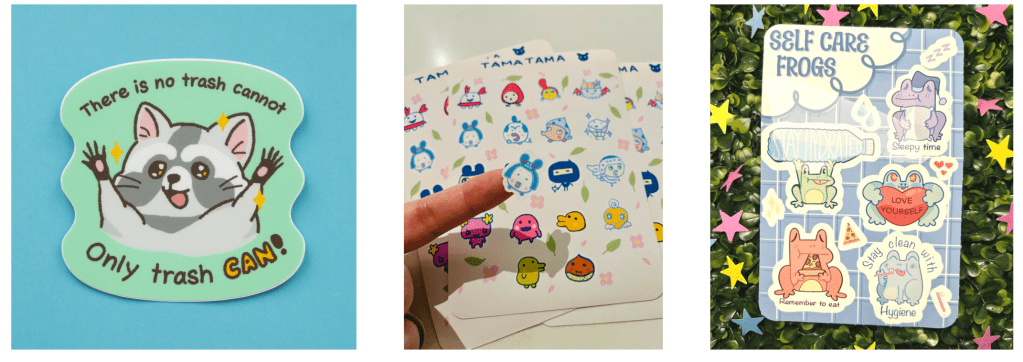
Etsy is my favorite online place to buy stickers, as there are many different artists that create stickers with designs that I like. For example, this trash can raccoon makes me smile, and these tamagotchi friends are nice and small to line up. You can even buy stickers with friendly self-care reminders, such as these frog stickers reminding you of basic daily care needs. I find it best to use the sticker book when I am feeling upset, stressed, or unproductive, as it is a creative way to display my favorite designs.
Outside of the smaller items within my toolkit, I also find it useful to keep a small weighted lap pad around. I bought this 7 lb one for its weight and portable size. Sometimes I wear it on my lap, and sometimes I drape it over my shoulders or on my back, depending on what feels best at the moment.

I keep all of these “tools” within a small open-top bin, similar to these ones, so that all my items are visually accessible and easy to grab in times of need. I can also easily place this bin within a portable bag if I need to bring it with me outside the house. When I am home, I keep this bin next to my computer desk, so that I am frequently reminded of my tools when I get overstimulated.

None of these items alone are a quick-fix to overstimulation, but together in one toolkit, they provide a beneficial resource for independently managing overstimulation throughout my day. When I become overstimulated, irritated, sensory fatigued, dysregulated, or simply just need a break, I can turn to this handy toolkit to test what will help me in the moment. Everyone’s toolkit can look different, depending on what helps the person, but I hope that sharing my own toolkit can provide some inspiration to those who are looking for ways to independently manage overstimulation in their life.

 Neurodivergent Space
Leave a comment